Benitez pushes TUBO Bill to protect sugar industry

NEGROS Occidental 3rd District Rep. and Assistant Majority Leader Javier Miguel “Javi” L. Benitez is pushing for permanent safeguards against disruptive sugar imports and stronger government support for farmers through House Bill No. 9088, or the proposed Tunay na Ugnayan, Buhay, at Oportunidad sa Asukal (TUBO) Act.
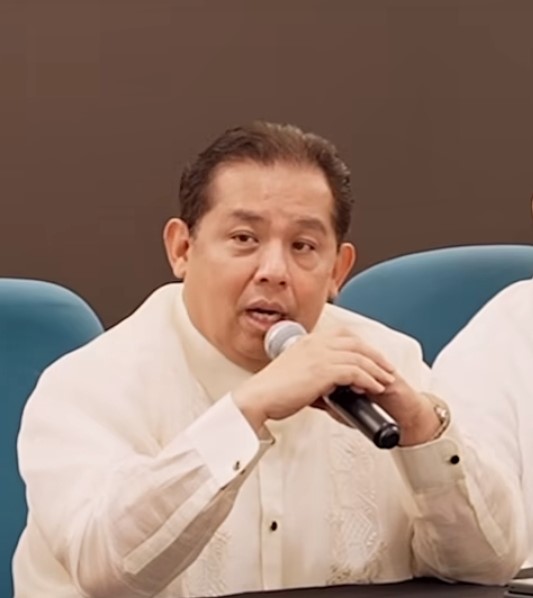
Benitez presented the measure Friday during a LegisHear public consultation in Victorias City, saying the proposed law seeks to make government decisions affecting the sugar industry more transparent and firmly based on production, inventory and consumption data.
“Congress could have held this discussion in Manila. We held it here, near the mill and the cane fields, because this is where people know sugar best,” Benitez said.
He noted that six of every 10 hectares planted to sugarcane nationwide are in Negros Occidental. About 88,000 Filipinos are engaged in sugarcane farming, 84 percent of them cultivating less than five hectares, while roughly 700,000 people work in the industry and five to six million dependents rely on it.
Benitez cited Sugar Order No. 8 as an example of what he said were the risks of import decisions made without sufficient industry consultation. He said stakeholders agreed during a July 7, 2025 consultation to import 150,000 metric tons of sugar, but the final order authorized 424,000 metric tons.
“When an import decision is made by order, without data and without the people who grow the cane, the farmer carries the cost,” he said.
He said millgate prices fell to P2,000 to P2,200 per 50-kilogram bag by January 2026, from a previously stable range of P2,500 to P2,800. Cane prices fell by 38 percent and molasses prices by 56 percent, resulting in an estimated P7.28-billion loss to the industry, according to Benitez.
The TUBO Act proposes five major reforms: increased and earmarked industry funding, safeguards on sugar imports, a price-support mechanism, stronger accountability for sugar mills, and greater transparency in government decisions.
Under HB 9088, annual funding for the sugar industry would rise from P2 billion to P5 billion beginning in 2027. Thirty percent would be allocated for farm-to-mill roads and irrigation, while 20 percent would fund climate adaptation and resilience programs.
Benitez said the increased funding is also needed to address the spread of the red-striped soft scale insect, which had affected 134,000 hectares nationwide as of Sept. 1, including 95,000 hectares in Negros Occidental. The pest can reduce the sugar content of cane stalks by as much as half, he said.
The bill also calls for an 18-month pause on commercial sugar imports upon its effectivity, except in cases of verified shortages. After the moratorium, imports would be allowed only when supported by supply data and would be prohibited during the first three months of the milling season. Imports could be triggered when verified raw sugar stocks fall below 200,000 tons.
“We want the rule written into law, so that changing it takes an act of Congress,” Benitez said.
The measure would also allow government intervention when verified millgate prices fall below the certified cost of production. The government could purchase sugar at a support price and maintain it as a reserve, with small farmers and agrarian reform beneficiaries given priority.
To strengthen accountability, HB 9088 proposes random and unannounced audits of mill laboratories, with penalties ranging from fines to suspension or cancellation of licenses for tampering. It would also require Sugar Orders to be published within 15 days, along with the votes and dissents, and establish a public dashboard tracking industry funds and their beneficiaries.
The bill further calls for twice-yearly consultations with farmers, workers, agrarian reform beneficiaries, millers and refiners.
Other proposed interventions include block farming, socialized credit, discounts of up to 30 percent on fertilizer and machinery, emergency cash assistance during pest outbreaks and calamities, temporary relief from loan penalties, price-support purchases, auditable mill measurements, and farm-to-mill infrastructure.
Benitez stressed that HB 9088 remains under committee consideration and that proposals raised during the LegisHear consultation would be considered by the technical working group.
“This bill is not a law yet. It is in committee. There will be hearings and there will be amendments, and some of them will come from this room. That is how it should work,” he said.
“A bill is only paper until it reaches the cane field.”
He also underscored the importance of the sugar industry to Negros communities, saying, “Ang tubo, indi lang ini tanom. Kabuhi ini. It is who we are as Negrosanons.”